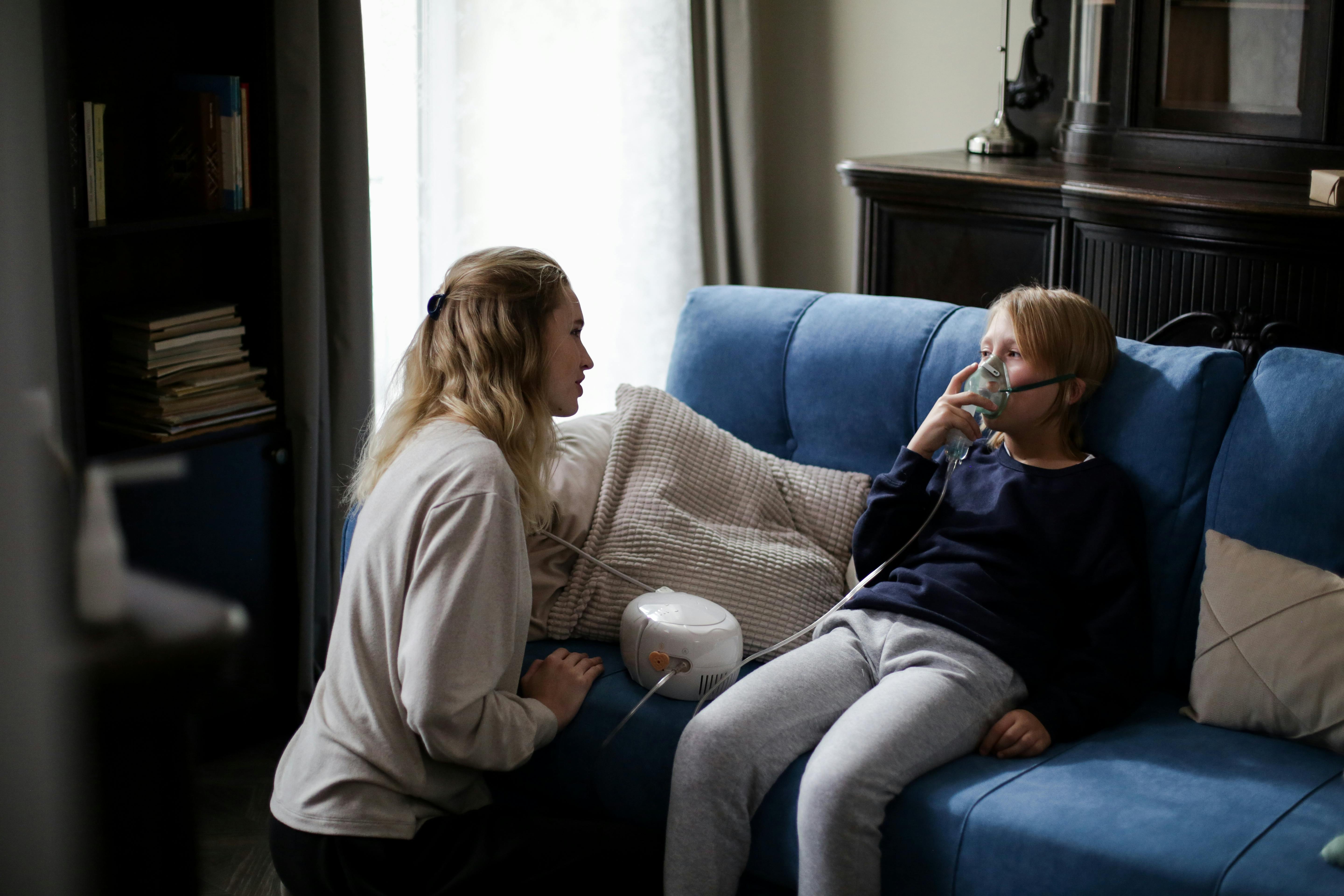
Your child feels warm, is irritable, and the thermometer reads 38.5 °C. While you're still wondering whether you can make it to work, your phone rings: the childcare. Or perhaps it doesn't — and you find yourself wondering if you should have called. Fever in young children always raises questions. When is your child really not allowed to go to childcare? And when will the childcare practitioner call you to pick them up? In this article, I'll outline the guidelines by age group, so you can decide quickly without being caught between work and caregiving.
What does the RIVM say about fever and childcare?
The RIVM (National Institute for Public Health and the Environment) and the Municipal Health Service (GGD) apply clear principles for fever at childcare. Fever in itself is not a reason for exclusion — it's about the underlying cause and how your child feels. Yet there is an important distinction between a slight temperature rise and actual fever, and between a cheerful snuffly child and a sick, listless child who needs one-on-one care.
The guideline makes distinctions by age, because the severity of fever and the risk of complications differ:
- Babies younger than 3 months: At a temperature of 38.0 °C or higher, you must always contact your GP. For childcare, this means: these babies are not allowed to attend when they have a fever, because infections at this age can escalate quickly and symptoms are often not yet clear.
- Babies from 3 to 6 months: At 38.5 °C or higher, GP contact is required. Childcare attendance depends on the general condition: is your child drinking well, responding alertly, and is there no other illness picture? Then childcare may sometimes be possible after consultation, but most locations apply a strict policy here.
- Children older than 6 months: Fever alone is not an automatic reason for exclusion. It's about the overall picture: is your child eating and drinking, playing along, and are there other symptoms such as rash, vomiting, or breathlessness?
Just as with RSV in babies and toddlers, childcare primarily looks at how your child feels and whether group care is feasible. A child who constantly needs comforting doesn't fit into the group rhythm — regardless of the exact temperature.
When will childcare call you to pick up your child?
Childcare practitioners don't call parents lightly. They know you have work or appointments. Yet there are situations where they have no choice but to ask you to collect your child:
- Fever rises above 39.5 °C and your child doesn't respond to paracetamol or ibuprofen (note: administering medication at childcare always requires written permission and a clear medication policy)
- Your child is lethargic, not responding alertly, or refusing to drink — dehydration is a real risk
- Fever accompanied by a skin rash that cannot be explained within a few hours (think chickenpox, hand, foot and mouth disease, or other childhood illnesses)
- Vomiting or diarrhoea combined with fever — this often triggers a double exclusion period
- The group is overflowing with sick children and your child is deteriorating, putting the staff-child ratio under pressure
Important to know: childcare may apply its own house rules that are stricter than RIVM advice. This is stated in their pedagogical policy plan and illness protocol. Ask about this during intake, so you won't be caught off guard.
The grey area: mild fever without other symptoms
This is where many parents stumble. Your toddler has 37.8 °C, is a bit quieter than usual, but eats their sandwich and plays along. Can they go to childcare?
The RIVM says: with fever without clear symptoms and in good general condition, childcare is usually possible. But — and this is a big but — childcare assesses this on site. A slightly elevated temperature can be the beginning of flu, an ear infection, or a viral infection. Moreover, a child with a developing infection is often already contagious before the real symptoms appear.
My advice: be honest when reporting. Mention that your child feels a bit warmer and ask if the practitioner will call if the condition changes. This builds trust and prevents your child from having to be collected halfway through the day — with all the work pressure that entails.
Fever with rash or snuffles: what changes?
The combination of fever with other symptoms fundamentally changes the calculation:
Fever + snuffles or cough
With a common cold without fever, your child can usually attend childcare as normal. But fever alongside it indicates a more active viral infection. Stay home if your child has a fever and is clearly ill. Has the fever passed and only some snuffling remains? Then returning is usually not a problem, unless the childcare decides otherwise during an outbreak in the group.
Fever + skin rash
Here the rule is: always be alert. Some rashes are harmless (such as heat rash), others indicate contagious childhood illnesses. Have your child assessed by your GP before going to childcare. With suspected chickenpox, impetigo, or fifth/sixth disease, specific return rules apply — often only when the blisters have dried out or the rash is no longer contagious.
Fever + vomiting or diarrhoea
The combination of fever with vomiting or diarrhoea is always a reason to stay home. Dehydration is a serious risk in young children. The GGD often applies an exclusion period of 24 to 48 hours after the last episode of vomiting or loose stool.
Practical checklist: can your child go to childcare today?
Use these steps to decide quickly:
- Measure the temperature — feeling alone is not reliable, use a thermometer
- Check the age limit: younger than 3 months and 38.0 °C+ = GP, no childcare
- Assess the general condition: is your child drinking, eating, and playing normally?
- Check for other symptoms: rash, vomiting, diarrhoea, breathlessness, ear pain?
- Consult if in doubt: call childcare before leaving, not en route
- Ask about the medication policy: can your child receive paracetamol if the fever rises?
Still in doubt after this checklist? Then staying home is usually the safe choice. Catching up on one day of work is annoying, but forcing a sick child into the group often leads to a collection call half a day later — with more stress for everyone.
When should you call the GP yourself?
Sometimes childcare is the least of your worries. Call your GP immediately for:
- Fever in babies younger than 3 months (≥38.0 °C)
- Fever in babies 3-6 months from 38.5 °C
- Fever lasting longer than three days
- Fever with stiff neck, confusion, or a non-blanching rash (glass test)
- Fever with severe breathlessness or blue lips
- Your child is drinking almost nothing and has fewer than three wet nappies per day
Trust your parental instinct. You know your child best. A practitioner who says "they weren't themselves today" often confirms what you already suspected.
How do you prevent disagreements with childcare about fever?
The best way to avoid misunderstandings is clear agreements in advance. During the settling-in period and intake interview, ask about:
- The exact illness policy and temperature thresholds
- Whether there is a 'grey area' and how this is handled
- The medication policy: who may administer what and with what permission?
- Communication agreements: who calls whom, and when?
On Kiddie.nl you can compare childcare locations on aspects including their illness protocol and pedagogical approach. This way you choose a place where the policy aligns with your expectations — and you avoid disappointments at times when you're already busy enough.
Conclusion: fever is a signal, not an automatic ban
Fever in your baby or toddler always causes concern, but it is primarily a signal that the body is fighting something. Whether your child may attend childcare depends on age, temperature, other symptoms, and above all: how your child feels. The RIVM provides guidelines; childcare adds practical and pedagogical considerations. By discussing the illness policy in advance and communicating openly when in doubt, you prevent stress at moments when you need it least.
Looking for childcare with a clear illness protocol and good communication with parents? Compare locations on Kiddie.nl and choose with confidence.