
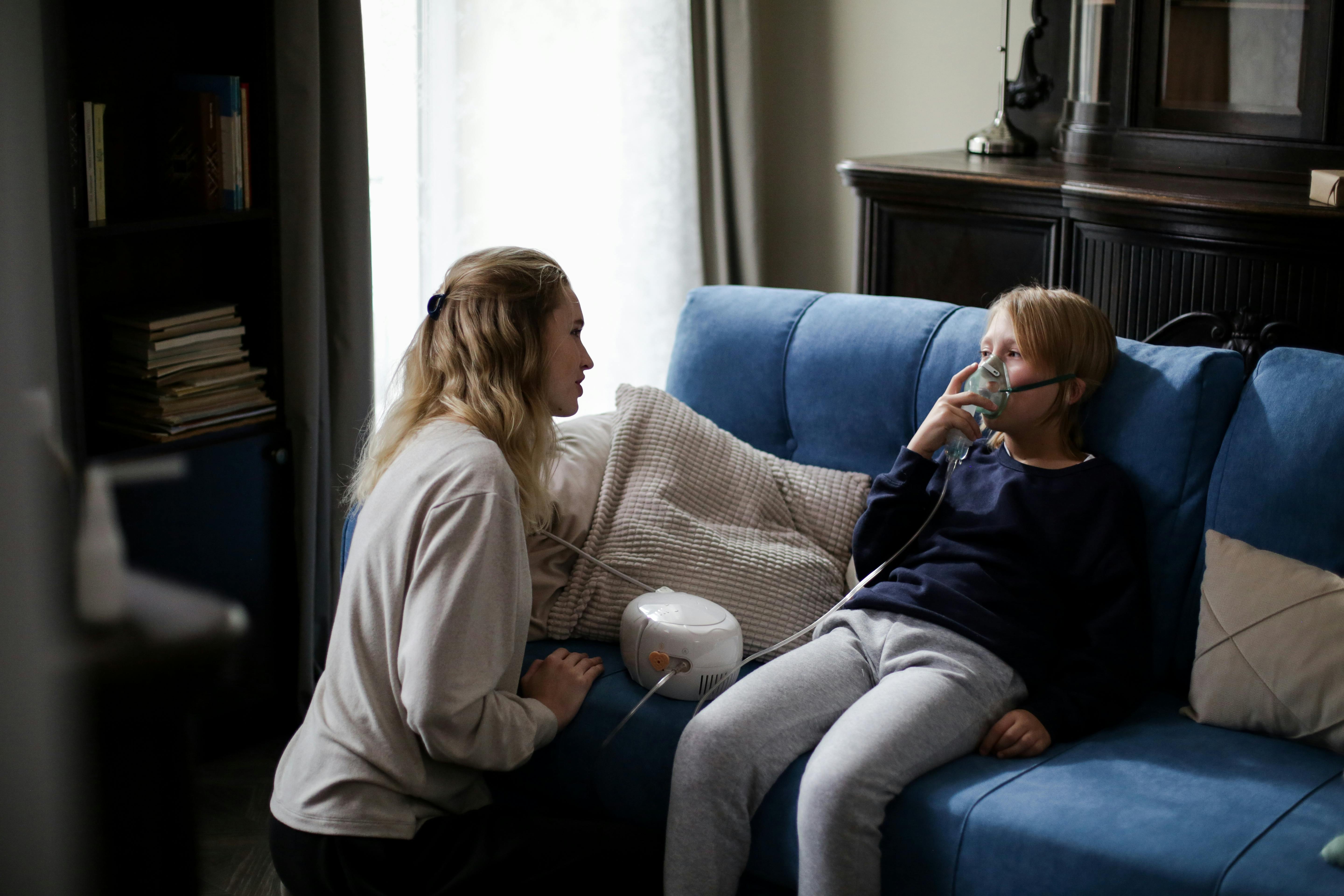
RSV in your baby or toddler: it often starts as a common cold, but can escalate to breathing difficulties and high fever within just a few days. For working parents, this is not only worrying, but also practically complicated. When can your child still go to childcare? When should you keep them home? And how do daycare centers and childminders handle an RSV outbreak in the group? In this article, I'll give you clear guidelines so you know exactly where you stand.
What is RSV and how do you recognise it?
RSV, short for respiratory syncytial virus, is a highly contagious virus that affects the airways. In adults and older children, it usually causes mild cold-like symptoms. In babies and young toddlers — especially under two years old — it can be more serious, as their airways are still narrow and swell shut more easily.
The first symptoms closely resemble a common cold: runny nose, coughing, mild fever and a slight sniffle. The crucial difference lies in how it progresses. With RSV, you'll often notice that your child:
- Breathes faster and more shallowly than normal
- Becomes breathless, especially when exhaling (sometimes with a wheezing sound)
- Has difficulty drinking or feeding due to a blocked nose and breathlessness
- Is more tired and less alert
- Develops a rising fever that lasts several days
Babies younger than six months have the highest risk of severe symptoms. Premature babies, children with heart or lung conditions, and children with weakened immune systems are at extra risk of complications such as pneumonia or bronchiolitis.
How contagious is RSV and when does contagiousness begin?
RSV is highly contagious and spreads through droplets in the air and through direct contact with contaminated hands or surfaces. The frustrating part: your child is already contagious before the first symptoms appear. The incubation period is two to eight days, and contagiousness is highest in the first two to three days of illness.
This makes prevention in childcare challenging. Even if all parents keep their children home when symptoms are visible, the virus may already be circulating. Childcare locations therefore implement additional hygiene measures alongside the RIVM guidelines during RSV season, which in the Netherlands typically runs from October to April.
When can your child go to childcare with RSV according to the RIVM?
This is the question on every parent's mind when the nose starts running and the calendar is full. The RIVM does not enforce strict exclusion rules for RSV, unlike conditions such as impetigo or chickenpox. This means: there is no fixed period during which your child must stay home.
The RIVM guideline focuses primarily on your child's wellbeing and the practical feasibility of childcare. Your child may attend childcare if:
- The child feels reasonably well and can participate in the daily routine
- There is no high fever (no 38.5°C or higher)
- The child is not severely breathless
- The care required is not so intensive that it disproportionately burdens the group or childcare staff
Important nuance: just as with hand, foot and mouth disease at childcare, the practitioner doesn't only look at what the RIVM says, but also at how your child actually feels. A baby who needs care every two hours due to breathlessness cannot get the attention needed in a group setting. In such cases, the childcare may ask you to keep your child home, even though there is technically no exclusion requirement.
When do you call the GP for RSV?
Some situations require immediate medical contact. Call your GP (or the emergency number for severe breathlessness) if your baby or toddler:
- Is struggling to breathe with pulling in of the ribs or a bobbing breastbone
- Develops a bluish or grey colour around the mouth or nails
- Refuses all drinks or has no wet nappy for more than eight hours
- Is extremely drowsy or unusually restless and irritable
- Has a fever above 39°C that doesn't respond to paracetamol
- Gets worse after a few days instead of better
For babies younger than three months: always call the GP at any sign of fever. Their immune system is not yet fully developed and they can deteriorate quickly.
How does childcare handle RSV in the group?
Daycare centers and childminders know RSV season well. They work with protocols aligned with the Childcare Quality Act (Wet IKK) and the RIVM hygiene guidelines. Here's what you can expect:
- Extra hand hygiene: childcare staff wash their hands more frequently and thoroughly, also between different activities
- Toys and surfaces: more regular cleaning of frequently used materials, especially for babies who put everything in their mouths
- Toy separation: some locations use separate toys for the youngest babies to limit infection spread
- Fresh air: regular ventilation of rooms, which reduces the spread of virus particles
- Communication with parents: notification when multiple cases occur in the group, so you can watch for first symptoms
The exclusion criteria in the illness policy of your childcare are leading for daily practice. Don't hesitate to ask about this during a tour or intake interview. Good childcare will clearly explain when they ask parents to keep children home and how they handle grey areas.
Practical tips to recognise and limit RSV
As a parent, you can also make a difference, both in recognising and preventing the spread of RSV:
- Know the pattern: RSV starts as a cold, but the breathlessness and rapid breathing often only appear after two to three days. Trust your parental instinct if you feel there's more going on than a simple runny nose.
- Keep your child home with fever and breathlessness: even when there's no formal exclusion requirement, this protects not only your own child but also the other children in the group.
- Wash hands at home and at childcare: this sounds basic, but consistent hand hygiene is the most effective way to prevent spread.
- Avoid smoke: children exposed to tobacco smoke have an increased risk of severe RSV progression. This also applies to smoke in the car or at home, even if not in the same room.
- Breastfeeding protects: breastfeeding offers some protection against severe RSV infections, although it doesn't prevent infection itself.
For parents struggling with whether their child attends childcare enough for social development: this article about the number of childcare hours helps you find a healthy balance between childcare, home and recovery.
When can your child return to childcare after RSV?
There is no fixed timeframe. The principle of the RIVM and most childcare locations is that your child may return when:
- The fever has been gone for at least 24 hours without the use of fever reducers
- Your child is drinking and eating sufficiently again
- The breathlessness has clearly decreased
- Your child can participate in the normal group routine again
Keep in mind that coughing and a mild runny nose can sometimes persist for weeks after an RSV infection. This is no longer contagious to the same degree, but it may lead to questions from other parents at childcare. An open conversation with the childcare practitioner helps to align expectations.
Conclusion: trust the combination of guidelines and your parental instinct
RSV is unpleasant, but in most cases your child will get through it without lasting damage. The challenge lies in the practicalities: when do you work through it, when do you stay home, and when do you call in medical help? The RIVM provides guidelines, but your childcare's illness policy and your own observation of your child are just as important.
On Kiddie.nl you can compare childcare locations on aspects including their illness policy, hygiene protocol and how they communicate during outbreaks. This way you choose not only a place that matches your pedagogical preferences, but also a place you can rely on when your child falls ill.
