
What exactly is nature-based childcare and how does it differ from regular daycare?
You've probably heard of the big educational names: Montessori, Reggio Emilia, Emmi Pikler, anthroposophy, Gordon. But there's an approach that's increasingly making waves and hasn't yet earned a fixed spot in that lineup: nature-based childcare or green daycare. Not a one-off activity or a weekly trip to the woods, but a continuous pedagogy where nature forms the beating heart of the day.
At nature-based childcare, everything revolves around being outside daily and for extended periods. Whether it's raining, snowing, or the sun is shining: children play, eat, discover, and sometimes even sleep outdoors. Nature isn't just the playground—it's also the teaching material, the comfort, and the challenge. This requires a very different approach than at regular daycare, where indoors provides the safe base and outdoors is an add-on.
What does a day at a green daycare look like?
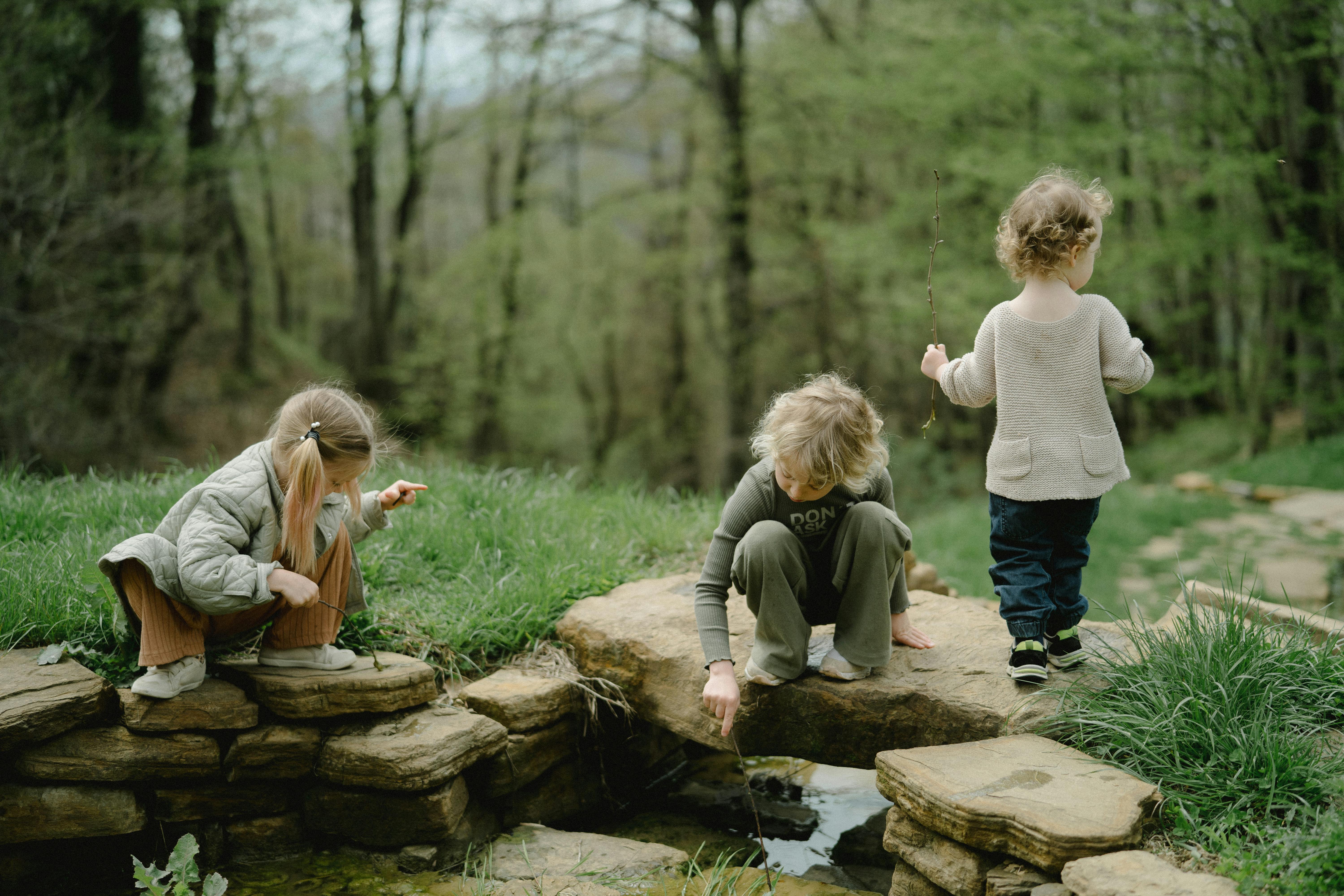
There's no rigid schedule with five-minute blocks, but there is a predictable rhythm set by nature itself. The day often starts outside: arriving together on the grounds, getting used to the air and light. Then comes free exploration. Children climb trees, dig in the earth, build shelters, or follow an insect's trail. The childcare worker observes, facilitates where needed, and intervenes with safety risks, but above all lets the child discover for themselves.
Around mealtimes, food is often cooked together over a wood fire or in an outdoor kitchen. The meal is a social moment, but also a practical lesson: where does food come from, how do you taste the seasons? Eating together outside also strengthens group bonding in a different way than sitting at a table indoors.
Sleep routines vary by location. Some green daycares have specific outdoor sleeping areas with mobile beds or cribs under a shelter. Others combine indoor and outdoor sleeping, depending on the season and temperature. The idea is that fresh air and natural sounds improve sleep quality—a practice that originated in Scandinavian countries.
What are the developmental benefits for your child?
The benefits of nature-based childcare go far beyond "getting some fresh air." Research shows that regular play in natural environments stimulates motor development: uneven ground, branches of varying thickness, and balancing on logs train coordination and muscle strength in ways that a playground with rubber tiles simply can't match.
Cognitively, your child learns to assess risks. A slippery stone, a wobbly branch: the brain is constantly stimulated to observe, predict, and act. This strengthens executive functioning, the mental skills that later become essential for planning, concentration, and self-control.
Emotionally, nature offers calm and regulation. The green environment has a stress-reducing effect, not only in adults but also in young children. Children who struggle with stimuli or busy group situations often find more room to be themselves outside. Nature demands nothing, passes no judgment, and simultaneously offers endless possibilities.
Socially, cooperation and conflict resolution emerge organically. Who builds the biggest shelter, who gets to use which piece of wood, how you run a mud kitchen together: these kinds of challenges require negotiation, sharing, and respecting each other's ideas. The childcare worker steps in less often as referee, because nature itself already provides challenging scenarios to learn from.
How do you recognize a truly green daycare?
Not every daycare with an orchard or weekly woodland outing is nature-based childcare in the full sense. Look for these characteristics:
- Daily and extended time outdoors: At least half the day, preferably more. In all weather types, with appropriate clothing and facilities.
- Nature as learning environment: No pre-programmed nature lessons, but children using nature themselves to learn. Sticks become magic wands, mud becomes cake, leaves become collectibles.
- Bold space for risks: Climbing, scrambling, making fire under supervision: the daycare dares to push boundaries and trust children in doing so.
- Seasonal rhythm: The day and activities change with the seasons, not the other way around.
- Sustainability in the broadest sense: Not just organic food, but also conscious use of materials, reuse, and respect for the living environment.
There are also certifications and quality marks that distinguish green daycare, such as the Groene KDV-keurmerk or membership in national networks for nature and forest daycare. Ask specifically about these during a tour, but above all trust your own observation: do you see children really outside, or is there mainly a beautiful plan on paper?
What should you know about clothing and preparation?
Nature-based childcare requires an investment in good outdoor clothing. Rain suits, woolen layers, sturdy boots, and hats aren't luxuries but necessities. Some daycares keep a supply of spare outdoor clothes; others expect parents to provide complete sets. Ask about this in advance, because a child who gets cold or has wet feet can't enjoy being outside.
The home routine changes too. Dirty clothes, mud under fingernails, twigs in trouser pockets: it comes with the territory. As a parent, you need to make room for this, and sometimes adjust your expectations about what "coming home clean" means.
How do you choose between nature-based daycare and another philosophy?
The choice for nature-based childcare is personal and depends on your child and your family situation. Some children thrive on the freedom and stimuli of the outdoors; others need more structure and shelter. Your own values also play a role: do you find sustainability and nature contact important, or do you attach more value to a specific learning method such as Pikler's emphasis on free movement or Montessori's prepared environment?
What's important is that during a tour, you don't just look at the location, but also at the childcare workers. Do they live the nature pedagogy? Do they show patience when a child cautiously climbs a tree? Do they not intervene immediately, but appreciate the process? The sensitive responsiveness of the caregiver remains crucial, even in the forest.
Is nature-based childcare suitable for every child?
Generally yes, but there are exceptions. Children with severe allergies to, for example, insect bites, grass pollen, or certain trees may experience more symptoms with intensive outdoor daycare. Always discuss allergies and dietary requirements extensively with the location. Children with certain physical limitations may also sometimes find it harder to participate in all activities, although many green daycares are particularly creative in making their grounds accessible.
For babies, extra attention applies to temperature regulation and shelter. Nature-based childcare for the very youngest is certainly possible, but demands even more from the caregivers in terms of observation and comfort.
Conclusion: nature as pedagogical foundation
Nature-based childcare is more than a trend. It is a full-fledged pedagogical vision that invites children to develop through direct contact with the living world around them. Nature offers no ready-made answers, but endless questions—and that is precisely what young children need to grow into curious, resilient people.
On Kiddie.nl you can easily compare childcare locations, also by pedagogical vision and outdoor facilities. This way you find the place where your child feels at home, indoors and outdoors.