
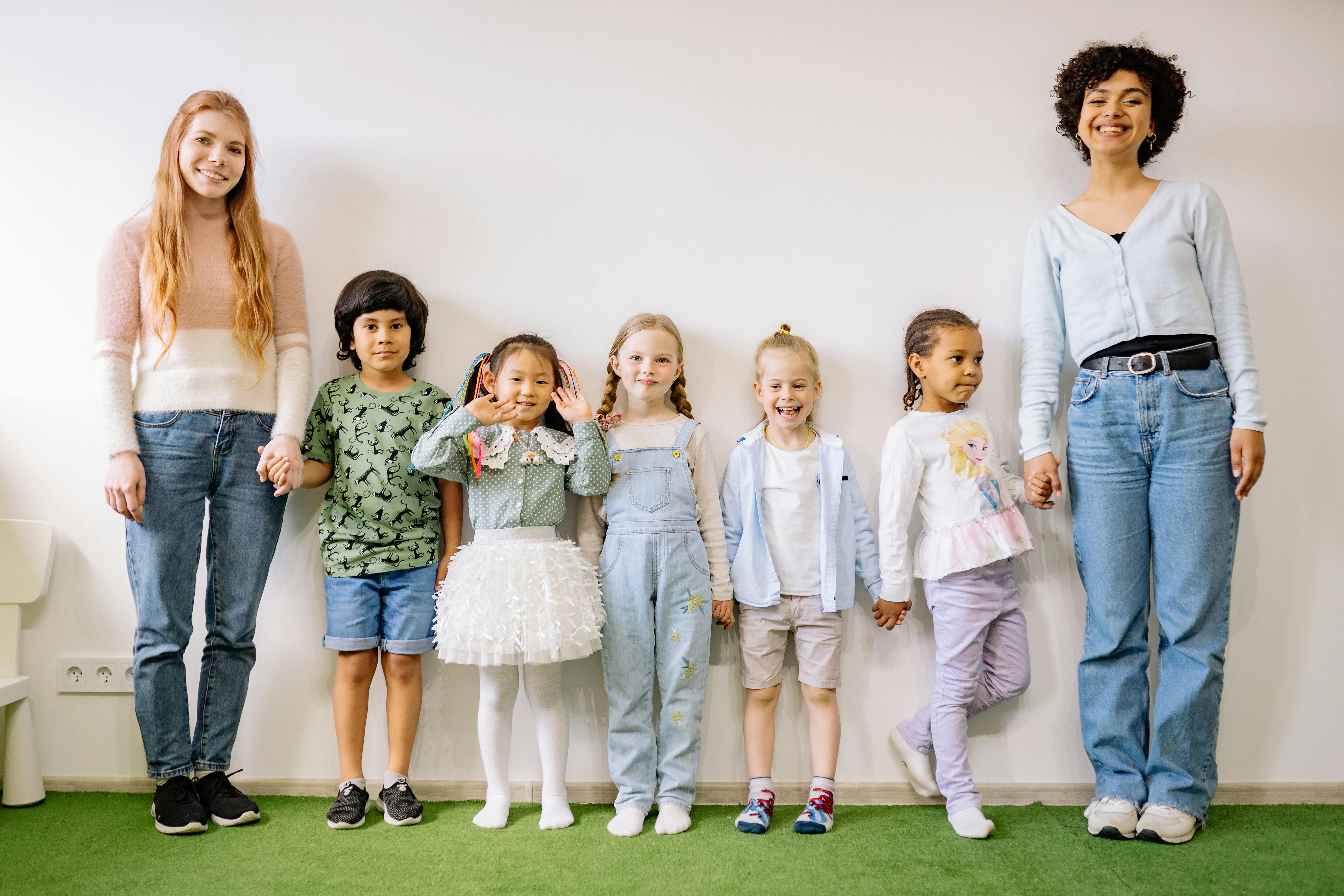
You hear it more and more often: inclusive childcare. But what does that actually mean for your child on an average day? Is it a pedagogical label, a legal requirement, or something you genuinely notice as a parent? And how does it differ from regular childcare or specialised care? In this article, we dive into the practice of inclusion in the group setting.
What exactly is inclusive childcare?
Inclusive childcare revolves around one core idea: everyone participates. Regardless of background, language, development, or support needs. It is not a separate type of childcare, but a pedagogical principle that runs through everything that happens in the group.
The pedagogical vision of an inclusive location translates into concrete choices: how you set up the space, which activities you choose, how you communicate with parents, and how you handle behaviour that differs from what you expect. The goal is not to treat all children the same, but to offer each child what they need within the same group.
This differs fundamentally from two other approaches:
- Regular childcare without an inclusive focus: here a standard approach often applies, where children who need extra support sometimes struggle to find a place, or where adjustments are made on an ad hoc basis.
- Specialised care: here children with similar intensive support needs are grouped together, often with more staff and specific expertise. Inclusive childcare aims for integration and mixing, not separation.
What does inclusive pedagogy look like in daily practice?
At an inclusive location, you notice the approach in details that together make the difference. A few examples:
Language and communication
Children grow up in multilingual families or have language delays. Inclusive pedagogy means that staff consciously use visual support (images, gestures), offer rich language input, and value the child's home language. It is not about 'catching up' in the corner, but about weaving language through play and interaction. Want to know more about how childcare stimulates language development? Read our article about language stimulation in childcare.
Play and activities
An activity like 'building a tower together' is set up so that every child can participate at their own level. One child sorts blocks by colour, another counts along, yet another makes up a story around it. The same activity, different challenges. This way children learn from each other without holding each other back or leaving each other behind.
Emotional safety and social inclusion
Inclusion only works if every child feels seen. This requires staff to pick up on signals of misunderstanding or exclusion early and actively intervene. Not by correcting children with 'you must be nice', but by exploring together what is going on and offering alternatives. This connects to the principle of sensitive responsiveness: being alert to what a child needs and responding to it adequately.
Physical environment
The space itself is a pedagogical tool. Think of quiet corners for children who process stimuli quickly, but also challenging corners for children who actively seek extra stimulation. A prepared environment where materials are accessible at different levels helps children make their own choices.
What does inclusion mean for children without additional support needs?
A common concern: 'Won't my child be overlooked if so much attention goes to others?' Research shows the opposite. Children in inclusive groups develop stronger social skills, more empathy, and better communication. They learn to deal with differences more flexibly, a competence that helps them throughout their lives.
Moreover, in every group the same applies: the quality of the childcare professional matters most. An inclusive vision actually demands more reflection and expertise, which benefits all children.
What can you expect as a parent from inclusive childcare?
When you visit an inclusive location, these are characteristics you can look out for:
- The pedagogical policy plan explicitly describes how diversity and differences are handled. Ask for it and have them explain how this works in practice.
- Collaboration with external partners: inclusive childcare works together with youth healthcare services, pedagogical advisory services, or speech therapists when needed. This is not a sign of shortcoming, but of professionalism.
- Flexibility in adjustments: whether it concerns dietary requirements, a quiet moment at a different time, or an adapted goodbye routine — the location thinks along with solutions.
- Open communication with parents: you are involved in the approach for your child, not informed afterwards. There is room for your expertise as a parent.
Current developments: cabinet and PO-Raad
Inclusion is also on the political agenda. The current cabinet is working on plans to improve childcare for children with a care indication and to strengthen collaboration between childcare, education, and youth support. The PO-Raad advocates for a clearer framework in which childcare and primary school work together, so that children do not 'fall between the cracks' during the transition.
An important point of attention is financing. Inclusive childcare sometimes requires extra staffing or adjustments. How this is paid for — through municipal subsidies, higher rates, or the regular childcare benefit (kinderopvangtoeslag) — varies per situation. Always ask at a location about the concrete arrangements.
How do you find inclusive childcare that suits your child?
Not every location that puts 'inclusive' on its website works the same way. Ask targeted questions during a tour:
- "How do you handle a child who doesn't speak Dutch well yet?"
- "Can you give an example of how you adapt an activity for different levels?"
- "How do you work with parents when extra support is needed?"
- "What do you do when children exclude each other during play?"
The answers give you a concrete picture of whether inclusion is a living principle, or a nice word in the brochure.
On Kiddie.nl you can compare locations by pedagogical vision, read experiences from other parents, and view Municipal Health Service (GGD) inspection reports. This way you find a place where your child is truly seen — with all the qualities and needs they have.
Conclusion
Inclusive childcare is not a separate world, but a way of working that raises quality for all children. It requires conscious choices from staff, a flexible setup, and open communication with parents. As a parent, you can ask targeted questions to discover whether a location truly has these principles down pat. Because inclusion is only really inclusion when you see it reflected in the small moments of every day.