
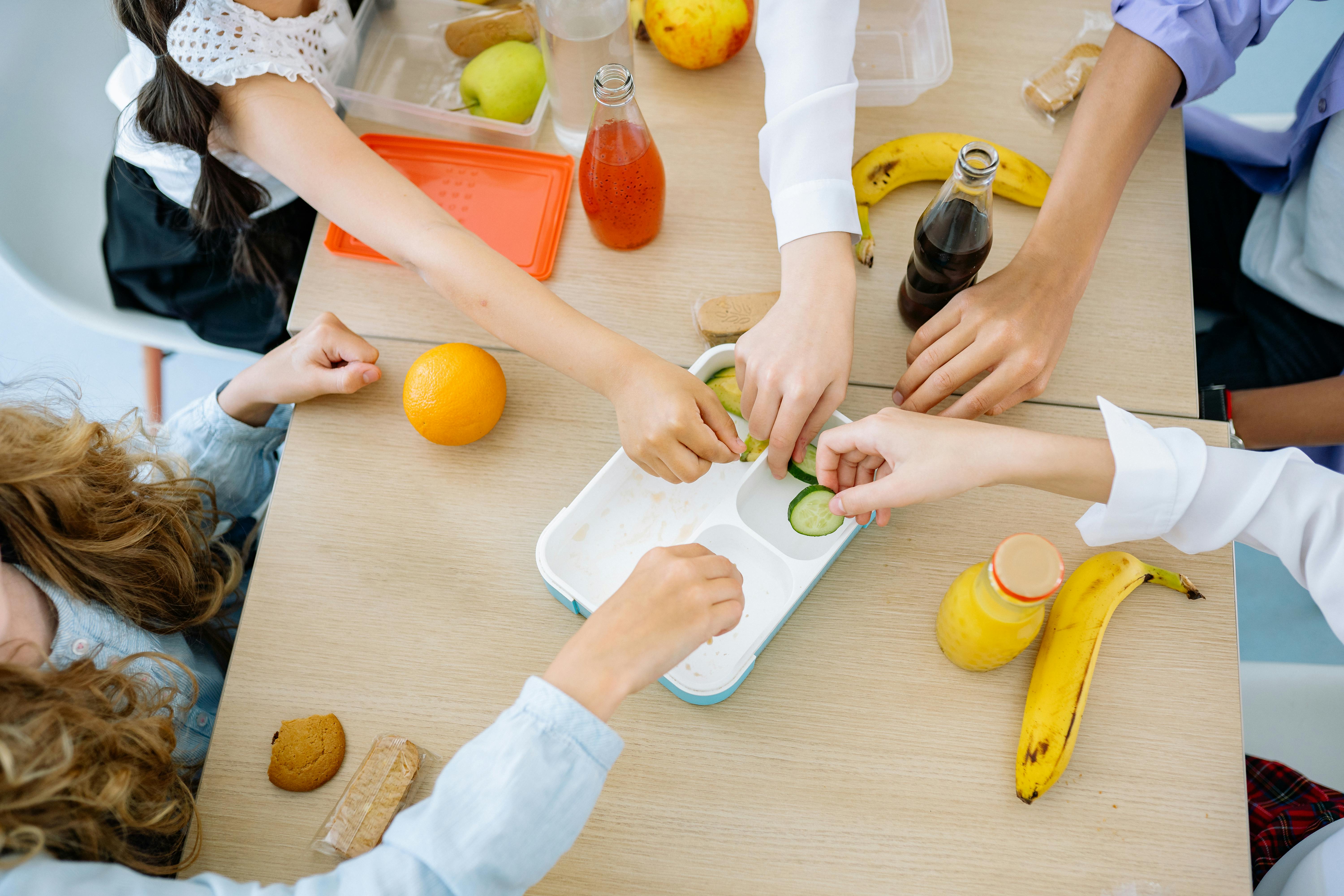
Why healthy treats at childcare are increasingly becoming the standard
Celebrating a birthday at the daycare center (kinderdagverblijf/KDV) or after-school care (BSO): it's one of those rituals your child will remember for years to come. But the days when a bag of candy or a slice of chocolate cake were the only options are increasingly behind us. More and more childcare locations are consciously choosing a treat policy with less sugar, sometimes even completely sugar-free. And this isn't strict or boring — it actually opens up opportunities for creativity and better habits.
As a parent, you naturally want your child to be celebrated in style, without compromising on health or inclusivity. In this article, you'll read how to treat by age group, why a clear treat policy helps, and how to account for allergies and dietary requirements. I'll also give you concrete ideas you can use tomorrow.
What makes a good treat policy at childcare?
A good treat policy is more than 'no candy'. It provides clarity for parents, peace of mind for childcare staff, and a sense of fairness among the children. No one wants to be the child who can't join in because there are peanuts in the treat.
At many locations, the treat policy is described in the pedagogical policy plan. This often includes:
- Which treats do and don't align with the childcare's vision
- How allergies and dietary requirements are handled
- Whether parents bring something themselves or the childcare provides the celebration moment
- How often treats are allowed (for example, only on the actual birthday)
Not sure about the policy in your child's group? Ask about it during intake or at a parent meeting. A childcare that is transparent about this shows that they think about nutrition as part of daily care.
Sugar-free treating by age: what works when?
Not every age group has the same needs when it comes to treats. What a baby can eat is completely different from what an after-school care child enjoys. Below I share practical ideas that match your child's development.
Babies (0-1 year): pure and simple
For babies, a 'treat' is mainly about the ritual, not the food itself. Parents are the ones who find it festive. A personal card from your baby, a nice photo for the group, or a small gift for the other babies (for example, a soft teething ring or crinkle book) are more appropriate than food.
If you do want to do something edible, choose something age-appropriate: for example, homemade fruit puree in small jars (with ingredients listed for allergy control). Make sure babies don't get honey, salt, or pieces of hard fruit/vegetables.
Toddlers (1-3 years): discovering with all senses
Toddlers are in a phase where they want to discover food primarily with their hands. Small bite-sized pieces, bright colours, and different textures make eating interesting. These are ideas that work well in a toddler group:
- Mini fruit skewers: pieces of banana, grape (halved lengthwise), strawberry, and melon on a plastic pick. Let the staff check that the pieces aren't too big.
- Hummus with vegetable sticks: carrot, cucumber, and pepper in child-friendly pieces. Many toddlers will eat vegetables if there's something to dip them in — monkey see, monkey do works doubly well here.
- Yoghurt bark: thin layer of Greek yoghurt with finely chopped fruit and a little grated coconut, frozen and broken into pieces. Note: only suitable if toddlers can chew well and the pieces are small enough.
Toddlers still have small stomachs, so keep portions modest. A treat doesn't need to be a second lunch.
Preschoolers (3-4 years): involvement and choice
Preschoolers increasingly understand what 'party' means and love to help with preparations. Let your child think along about the treat — this gives them pride and responsibility. Ideas for this age:
- Homemade popcorn (not from a bag, but plain in a pan): in small bags or cups, optionally with a little cinnamon.
- Apple-cinnamon muffins with oats and grated apple: less sugar than regular muffins, but sweet enough for a party.
- Treat bento: a small box with different compartments, filled with raisins, nuts (always check for nut allergies first), cheese cubes, grapes, and a small rice cake.
At this age, it also works well to link the treat to an activity: singing a song together, a short dance, or a game. This puts the moment centre stage, not just the food.
After-school care children (4-12 years): challenging and hands-on
At after-school care (BSO), children mainly want to be seen and to make things themselves. A treat they can put together themselves always scores well. Some sugar-free or low-sugar ideas:
- DIY fruit wraps: children roll their own wrap with fresh fruit, a little peanut butter or hummus, and shredded mint.
- Smoothie bar: with permission from the childcare, you bring a blender and let children create their own smoothie from yoghurt, frozen fruit, and a little honey.
- Homemade grissini: breadsticks with herbs and cheese, which you bake at home and bring in a festive bag.
BSO children often already have strong opinions about what they like and what's cool. Discuss with your child what fits the group, without losing sight of the healthy line.
Allergies and dietary requirements: how to keep it safe and inclusive
This is where treats can quickly get complicated. Every group has children with an allergy, intolerance, or dietary requirement — whether it's cow's milk, peanut, egg, gluten, or something else. A childcare with a good allergy protocol makes clear agreements about this.
As a parent, you can do the following:
- Ask well in advance about allergies in the group. The childcare staff member knows this or can find out for you.
- List all ingredients on a note with the treat. Even if you think it's 'safe' — traces of nuts or milk can be in anything.
- Choose simple recipes with as few ingredients as possible. The fewer components, the smaller the chance of an allergic reaction.
- Consider a group-wide treat that is naturally free of the most common allergens, rather than a separate alternative for one child. This prevents a child from feeling different.
Are you unsure whether something is safe? Always consult with the staff member. They know the protocol and what is and isn't possible in that specific group.
The pedagogical value of healthy celebration moments
A treat isn't just food — it's a social moment. Children learn all sorts of things from it: sharing, waiting your turn, considering others, and yes, also healthy eating habits. When a childcare consciously chooses healthy treats, it sends a subtle signal: celebration doesn't have to be linked to sugar.
The new Wheel of Five emphasises that children under 4 don't need any added sugars at all, and older children are also better off with as little as possible. Childcare locations that translate this into their treat policy align with these guidelines and also help parents at home.
Additionally, you often see that children try new flavours more easily in a group than at home. The positive group feeling carries over to the plate: a toddler who won't look at carrots at home suddenly eats that carrot stick when the whole group goes 'tickticktick' against the hummus. You can consciously use this effect.
How can you as a parent contribute to the childcare's approach?
You don't have to passively wait for what the childcare decides. There are various ways to constructively contribute to the treat policy discussion:
- Raise it at the parent committee. Many locations have a parent committee that contributes to policy. Nutrition and treats are a logical topic to discuss here.
- Share success stories. Have you discovered a recipe at home that also worked in the group? Send it to the childcare staff member or post it in the parent app.
- Be consistent between home and childcare. If you also use less sugar at home, this seamlessly aligns with the group policy. Your child won't get mixed messages.
- Respect the childcare's choices, even if you would do things differently personally. A clear line helps everyone, including your child.
Want to know how a childcare handles nutrition, treats, and allergies before you choose? On Kiddie.nl you can compare locations and specifically search for childcare with attention for healthy food or its own nutrition policy.
Conclusion: treating is more than candy
Healthy treats at the daycare center (kinderdagverblijf) or after-school care (BSO) aren't a passing trend — they fit into a broader movement where childcare locations are more consciously dealing with nutrition as part of daily pedagogy. For you as a parent, this means you can be creative without overloading your child with sugar at a moment that's already festive enough.
The best thing about a good treat? That your child looks back on it with a smile — not because it was so sweet, but because celebrating together was so much fun.